The Saying “Dress For Success” Has More Influence On Your Productivity Than You May Think
It’s no surprise that what we wear puts us in a certain mood or frame of mind. We’ve all felt powerful, intelligent and sexy depending on the clothing we wear.

It’s no surprise that what we wear puts us in a certain mood or frame of mind. We’ve all felt powerful, intelligent and sexy depending on the clothing we wear.

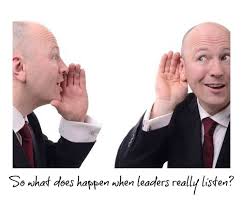
We live in a world where communication dominates our day to day life. However, we will often hear slectively. The power of listening lies in taking an interest in what others actually have to say.
“Wisdom is the reward you get for a lifetime of listening when you’d have preferred to talk.” — Doug Larson

Today’s leaders cannot demand respect. They must alter their mindset and become more accountable, actionable and fully engaged. They must realize that their actions influence productivity. Rather than command respect, in order to create an environment of trust, loyalty and earned admiration, they should roll up their sleeves and lead by example.

Whether your workplace is casual, creative, social or competitive, a cohesive workplace culture reinforces the way your business operates. Clearly productivity improves when an inclusive culture makes every person feel like they’re part of the team.

One of the most common analogies for organizational vision is a roadmap. The leader’s vision guides the vehicle—or the company—towards that destination, managing change along the way. Eric Basu, Forbes contributor, offers a different viewpoint: “The vision is the reason for being in the car and driving in the first place.” This statement highlights the importance of establishing vision, which is step one in my model for managing complex change. A map has many alternate routes, but the reason for being “on the road”—or in your business—remains constant. Getting at that reason often trips up an organization.

It may surprise you to know that many cognitive theorists have emphasized a strong link between what people say to themselves and their behaviour. Studies suggest that this inner dialogue can affect a person’s emotional and behavioral outcomes, bringing on anxiety and negative thoughts during a presentation, completing a project or a performance.

Ask a manager what they struggle with, and nine out of ten times it involves time management. The impact on productivity is why time management training is key.
In fact, most managers I speak with have taken several time management training programs —or tested out several time management systems – but still have trouble making the most of their time. Sound familiar?

In the business world, the daunting challenge of complex change cannot be avoided. Often urgent, it is worth the time to carefully analyze and manage, especially guiding the process towards success. When demonstrating change to executives and business owners, I rely on the following five-key model, which is especially useful when a puzzling change project in their organization hits a roadblock. Consider it for yourself. This model describes the components of a successfully managed change program as well as the five distinctive roadblocks that emerge if one of these components is lacking.

Have you recently looked at your working style and checked to see if it varies from those of your employees? It goes without saying, that to successfully manage others, we must know how to manage ourselves.
Certainly, we can’t do everything perfect all of the time, but do we expect more or less from others than what we are contributing ourselves? Now may be a good time to review your company’s working environment by asking yourself a few questions about your working style…
Executive Coaching San Francisco Supports Decision Makers Across the Country to Reach Their Full Potential, So They Can Lead Their Company With Distinction and Success.